
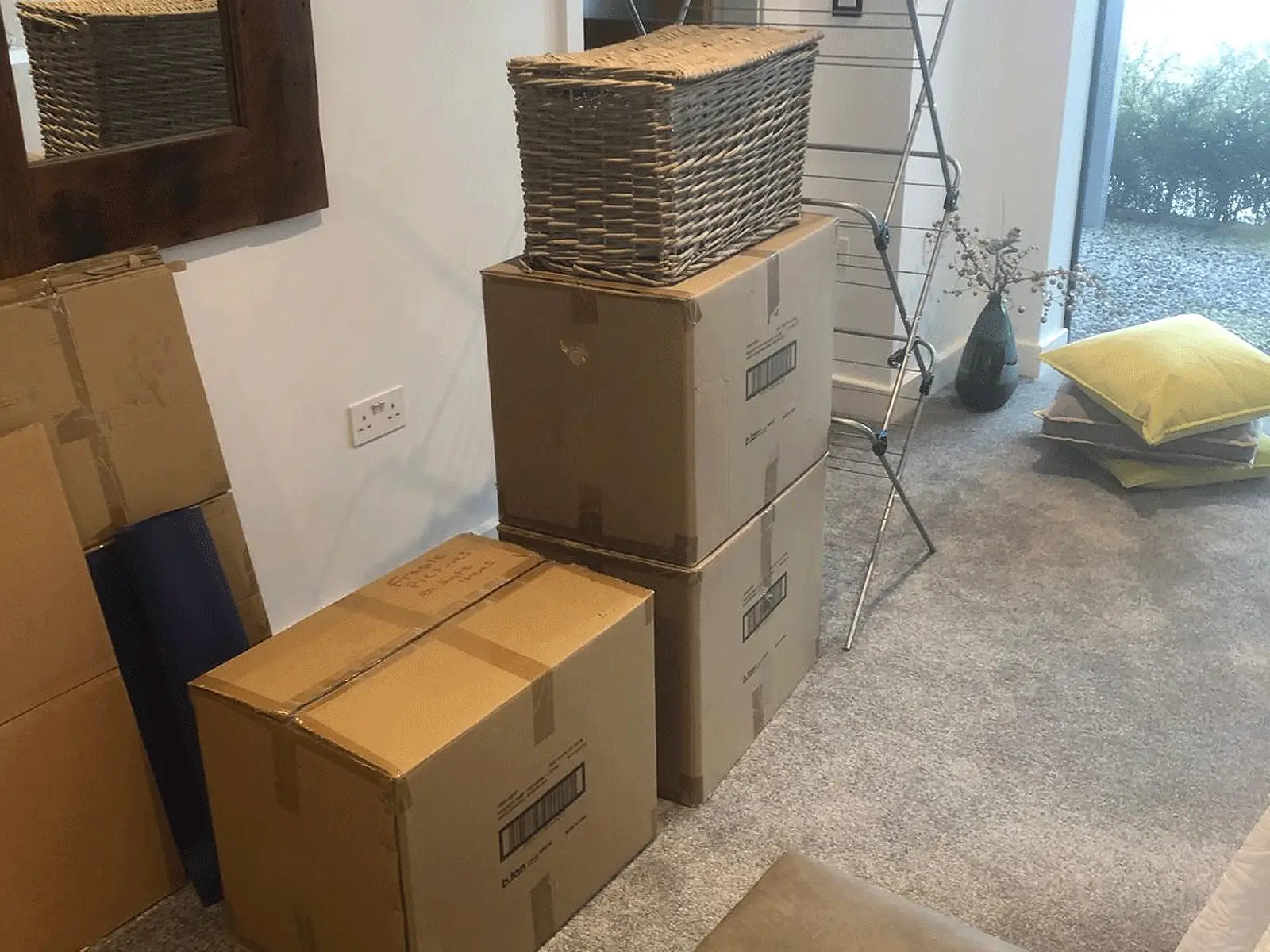
The most common question we hear after "how much will it cost?" is "do I actually need storage?" Usually the answer is no. Occasionally it's yes, and when it is, knowing early saves money.
Here's how to decide, written from the experience of doing this with hundreds of Huddersfield families every year.
When storage is worth it
1. Your completion dates don't line up
This is the classic case. You're out of the old place on Friday, but the new place isn't ready until the following Wednesday. You have two options: a hotel or an Airbnb for the family (which gets pricey fast for a week), or storage for the stuff plus a short-term rental just for you. For anything longer than 48 hours, storage is usually cheaper and less stressful.
2. You're downsizing
If you're moving from a family home into somewhere smaller, you often can't immediately decide what's going into the loft, the garage, or the charity shop. A month or two of storage buys you time to sort without pressure. We'd rather help you think than have you make decisions you regret.
3. You're renovating before you move in
Getting new floors, a kitchen, or a full renovation done on the new place before you bring furniture in? Store everything for the duration. Trying to live around builders is a quick way to turn a dream renovation into a family feud.
4. You're between lets or relocating
Rental moves often have 1–4 week gaps. Relocating for a job where you're staying in temporary accommodation is similar. Storage lets you focus on settling in before worrying about your stuff.
5. A family change is in progress
Bereavement, separation, new partner moving in, adult children leaving home. Life events that involve merging or splitting households often produce "too much furniture" temporarily. Storage buys you space to figure out what's staying.
6. You're selling a house but haven't bought yet
Sold your old place, exchanged, but the chain on your onward purchase fell through? You're technically homeless on your stuff's behalf. Store it, stay with family or in a short-let, and wait for the right new place. Better than rushing into somewhere you don't love because you need a roof for the sofa.
7. Your new place isn't big enough for everything yet
Older kids' bedrooms still full of school-era stuff that'll need sorting in the summer? Garden furniture waiting for summer? Christmas decorations you won't need for 10 months? Storing seasonal or waiting items while you settle in can make unpacking far more manageable.
8. You're moving out of the country (temporarily)
Going abroad for six to eighteen months? Storing the household contents is almost always cheaper than paying rent on a UK home to keep things in. We can handle the move to storage and the move out again.
When storage isn't worth it
Be honest. If the answer to "will I actually use this in the next year?" is no, the question isn't "where do I store it?" It's "why am I moving it?" Declutter before you move. Every cubic metre you cut is both moving and storage money saved.
If your completion dates are 24 hours apart, you usually don't need storage. The van can load on day one, stay locked overnight at our depot, and unload on day two. We call this overnight storage and it's effectively a one-day van rental rather than true storage.
The three kinds of storage to choose between
1. Big-chain self-storage
Access 24/7, you provide the boxes, you do the lifting. Priced per unit size. Good for independent access, less good if you don't want to lift things twice or lug items across a car park.
2. Removal company storage (like ours)
You hand the stuff off to us, we store it in secured containers at our depot, we bring it out when you're ready. See our self-storage service for details. Priced per week from £6, sized to fit what you've got, so you only pay for what you actually use. Includes the lifting both ways.
3. Portable / container storage
Company drops a container in your driveway, you load it, they take it away and store it. Growing in popularity but only works if your driveway is wide enough and your council is relaxed about container aesthetics for a few days.
For most people with genuine "between homes" needs, option two works out best over the whole cycle because you only pay to lift things once. For long-stay independence-first storage, option one wins. For a one-off "I need a container for a weekend" situation, option three.
How to avoid the common pitfalls
- Estimate volume accurately. Most people underestimate their own contents. Do a realistic walkthrough or let us do a free survey.
- Pack for storage differently from packing for a move. Boxes in storage need to survive weeks or months. Use double-walled boxes, tape both top and bottom, never overfill.
- Don't store anything flammable or perishable. Paint, petrol, gas canisters, open food.
- Don't store items covered in dust or damp. They'll come out worse than they went in. Clean and dry first.
- Keep one inventory. On paper and in a cloud file. You will forget what's in box 23 by month two.
- Insurance matters. Confirm whose policy covers the stuff while it's stored. Don't assume.
Our honest advice
If you're moving into a new home that's ready and you have a same-day or next-day completion, storage isn't worth the hassle. If there's any ambiguity, get a quote. Storage costs are small relative to moving costs and the flexibility it buys is significant.
Chatting through your specific situation is free and often clarifies things fast. WhatsApp us or email [email protected]. We'll tell you honestly whether storage helps or if you're better off without it.
Frequently Asked Questions
How much does short-term storage cost in Huddersfield?
Is my stuff insured while it's in storage?
How quickly can I get access to items in storage?
Keep reading
How Much Does It Cost to Move House in the UK in 2026?
2026 UK costs to move house: £250-£2,000+. The six factors that drive your quote, the red flags to spot, and how to tell a fair price from a bait-and-switch.
The Moving House Checklist We Actually Use (UK)
An 8-week moving house checklist from Huddersfield's top-rated removal company. Everything to do, book, and pack, week by week, so nothing gets missed.